
Mental Health and Well-Being: Supporting the Next Generation
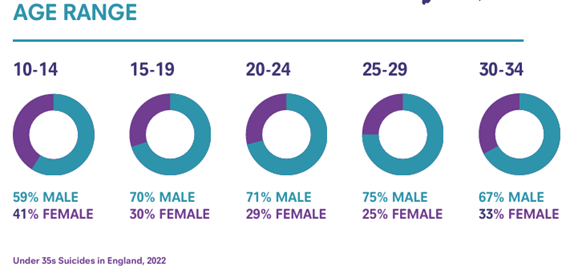
UK statistics continue to highlight the mental health and wellbeing challenges of young people. In 2023, one in five children and young people aged eight to 25 had a probable mental health condition (NHS England). This statistic has continued to rise since 2017, with the most notable increase for those aged 17-19.
According to Papyrus, suicide was the leading cause of death for people aged between 5-25 in England in 2022. Around 75% were boys or young men.
Despite this, at the end of July 2025 there were over half a million referrals to Child and Young People’s Mental Health Services (CYPMHS) where young people were still waiting to start treatment. Half of these young people had been waiting over a year (Mind). With these well documented pressures on existing mental health services in the UK, a community focused, proactive approach is required to support our children and young people; the next generation and future workforce.
The notable increase in mental health challenges around the age of 17-19 is not surprising when we consider that this is a time of significant transition and uncertainty for young people; making choices about their future, transitioning into full-time employment for the first time, etc. The charity, Young Minds, reported that 35% of 18-24 year olds in employment reported needing to take time off work due to poor mental health or stress. Furthermore, Mind’s Care Before Crisis: report on young people's mental health stated that 4 in 10 young people surveyed said mental health harmed their ability to work, and fewer than a third felt optimistic about future employment.
Workforce retention and a widening skills gap is becoming an increasing concern across a variety of industries. Within construction, the Construction Industry Training Board (CITB) report that nearly 60,000 potential new entrants leave the industry each year. In response to this, CITB have launched a strategic plan to address the skills shortage which is becoming a critical issue.
Two of the key objectives of this plan are to:
Inspire and enable diverse and skilled people into construction by increasing new entrants into the industry through various routes.
Support the industry to train, develop, and retain its workforce.
A vital element which needs to be embedded within objectives such as these to support workforce planning, regardless of the industry, is mental health and wellbeing. How can we better support young people and equip with them the skills they need as they prepare for key transitions, take on new challenges (such as apprenticeships) and make the shift to full-time employment, with full-time responsibilities? Recent research by Construct Minds has shone a spotlight on the experiences of young people in construction and it is clear that wellbeing considerations and associated action are going to be vital to the retention of the workforce.
Schools, colleges, sports clubs and apprenticeship providers are just a few of the places well positioned to have the potential for significant impact. Supporting and fostering wellbeing needs to start early and be embedded across all contact points with young people to role model development of healthy habits, understand and support emotional regulation and empower young people to make meaningful, supported choices. Rising disability benefit claims linked to mental health highlights the financial impact of failing to provide this early support (Mind) notwithstanding the personal impact felt by so many young people.
Community focused support for young people is two-fold:
1. Prevention – where possible, role-modelling, advocating for and championing self-care to support young people to feel empowered to make choices and take action that supports and sustains their well-being using robust approaches such as the NHS 5 steps to mental wellbeing.
2. Early detection – those who are familiar with the usual habits, routines and behaviours of young people will be best placed to identify changes and signs that they may be struggling with their mental health. Early identification helps facilitate conversation and signposting to timely support.
The current system is at breaking point, with widespread impacts felt by individuals, groups and industries. A true community approach ensures services/organisations/education systems are built with a mental health and wellbeing framework embedded at its core and weaved throughout all that we do.
‘Alone we can do so little; together we can do so much.’ - Helen Keller
Charmaine Chandler
Head of Well-Being, Haswell Training
Registered Occupational Therapist (HCPC: OT61743)

About the author: Charmaine Chandler
Charmaine is our Senior Quality Assurance Manager & Head of Wellbeing being a qualified Occupational Therapist registered with the Health and Care Professions Council bringing 14 years experience to the team.
View Charmaine Chandler's full bioDiscover more blog content
This page aims to provide you with some clarity and options to support you in making that step. ...
Book in a free meeting with our wellbeing lead who can visit you and your team in person or via M...
Those working in construction are nearly four times more likely to take their own life when compa...
Here we will explore what asbestos is, what a Category A Asbestos Awareness Course entails (https...
Our aim is to share a weekly blog exploring all things Haswell and training related.